

Parish Share
Don’t be Bullied on the Calculation of Parish Share
Many dioceses are in the habit of telling PCCs that their parish share needs to cover the ‘cost of clergy’ for their parish. This can happen no matter whether your parish is stand alone with one vicar, or if you are part of a multi parish arrangement, sharing one or more clergy. Dioceses can also be slow to reveal what elements of their income cover the cost of clergy, giving the mistaken impression that the parish share has to cover the whole cost on its own. If PCCs want to challenge the parish share request then they need to brief themselves on diocesan finances and how such calculations are being made.
Remember the legal position is that the parish share is a voluntary donation from one charity to another – from the PCC to the Diocesan Board of Finance (DBF). As with any donation, the receiving charity needs to be prepared to explain where the donation will go and how it fits into the receiving charity’s pattern of expenditure, for example on ‘operations’ versus ‘administration’.
This article helps explain the points of challenge on how your diocese may calculate parish share. It is worth noting that some dioceses use a ‘covenant’ system whereby PCCs are challenged on how much they can donate, without it being related to any calculation of costs. In other dioceses the spread of parish share across a group of parishes can be left to the benefice or deanery to work out amongst the parishes. This approach can be very divisive. If this is the case for your parish, you might have two concerns – the total level of parish share sought for the benefice or deanery, and the amount that is allocated to your parish within that total.
‘The Cost of Clergy’
Dioceses use this term to illustrate how much it costs them to provide a vicar. They generally emphasise that it is only an illustration, yet try to make it stick. It usually has no basis in accounting rules, for example not including such things as depreciation, property revaluations, or capital gains or losses.
There is an arbitrariness in what is included and what is not. For example, there is a wide variation amongst dioceses on what elements of clergy training are included. Ordination training? Curates training? Continuation training? As a minimum it is probably fair enough to include the clergy stipend (the vicar’s ‘pay’), pension and housing costs. Housing cost should also be challenged. Many parsonages lie within Diocesan Stipends Funds. Any rental income, net of upkeep, from parsonages occupied by non-clergy tenants should be available to support stipends. The diocese owes parishes an explanation of how such calculations are made and factored into the ‘cost of clergy’.
Any other inclusions in the ‘cost of clergy’ should be clearly explained and are open to challenge by PCCs. The ‘cost of clergy’ sum varies across dioceses from just over £50,000 pa in some to nearly £80,000 pa in others. This illustrates just how arbitrary the calculation is. If a PCC is being told they are not donating enough parish share to cover the ‘cost of clergy’, then the first step is to gain an understanding on how that cost is calculated. The diocese may be setting the bar unrealistically high.
Sources of income to pay for Parish Ministry
Dioceses coordinate many sources of income in order to provide priests for parishes and cover other costs. Language often slips, giving the impression that they the diocese are paying for ministry in your parish – usually it is parishioners who are paying the lion’s share. Typical sources of income that go towards the cost of ministry are:
- Parish Share. This is a voluntary donation between PCC and Diocese. If you look at the spreadsheet for your diocese you can see on Line 6 the total amount of parish share your diocese received in the most recent year for which accounts are published. On Line 25 you can see the total amount across your diocese that was spent that year on parish ministry.
This provides the first clue on how far the parish share is going towards the provision of vicars across the diocese. For example in Canterbury Diocese, parish share amounted to £7 million whereas expenditure on parish ministry was only £5.9 million, so parishioners might well ask where their parish share was going, beyond the provision of parish ministry. Whereas in Lincoln Diocese parish share amounted to £3.8 million, but the cost of parish ministry was £6 million – so there was a considerable gap to close with income from other sources. - The Diocesan Stipends Fund (DSF). These are generally substantial amounts of endowment held in a restricted fund that can only be spent on clergy stipends (pay), housing and national insurance. For precise wording see the DSF Measure 1953 S.4. The amount held by your diocese are shown on Lines 90-96 of your diocesan finances spreadsheet. This varies considerably across dioceses. For example, Southwark Diocese has £94 million in their DSF, as compared to Chester Diocese with only £4 million.
Most of the capital in these funds comes from the glebe land and other assets formerly held by parishes which was centralised into dioceses into 1976. So although managed by the Diocesan Board of Finance in each diocese, this is ‘parish money’. The income from your DSF should be shown as contributing to the ‘cost of clergy’ in your parish.
Investment performance varies hugely and only some dioceses optimise their income by applying total return accounting. See here for more information about your diocese’s DSF. - Low Income Communities Funding (LINC). This funding flows from the Church Commissioners (whose historical charitable purpose is the ‘cure of souls’ in poorer parishes) through the Archbishops’ Council to eligible dioceses in order to support ministry in more deprived parishes. Not all dioceses receive this as the criteria are calculated on the average household incomes across the diocese and the levels of deprivation in each parish, as calculated by the Government. For example, Truro Diocese receives generous LINC, whereas Oxford Diocese receives none, even though there are some seriously deprived parishes in Oxfordshire.
A fuller explanation of the methodology is at https://www.churchofengland.org/about/vision-strategy/funding-strategic-mission-and-ministry/smmib/lowest-income-communities-funding. Your PCC needs to understand whether your diocese is receiving LINC, and if so, how it is distributed to individual parishes, including yours. If your parish is eligible, your diocese should be able to tell you how much your PCC is receiving and how it contributes to the ‘cost of clergy’ in your parish. - Other Central Church Grants. Through a body called the Strategic Mission and Ministry Investment Board (SMMIB), which acts on behalf of the Archbishops’ Council, grants are awarded to particular dioceses from time to time. These usually receive local publicity and if your diocese is in receipt of one there should be details on your diocesan website.
Some of the money in these grants looks as if it could be destined for parishes under such terms as ‘parish revitalisation’. Often the money is in fact allocated to particular parishes or projects that meet the strict criteria of the allocation of the grant. These criteria are generally not published! Nonetheless you should ask if in your diocese there is any SMMIB grant money that is awarded for help with ministry in your parish. - Other Endowments. Over the years most dioceses have accumulated various legacies, donations and other contributions to endowment funds. Much of the sums held in these funds were donated many years ago when parish ministry was the only realistic beneficiary. It is very difficult to discern from diocesan accounts what amounts are held and for what beneficiaries. You should ask your diocese whether, in addition to the DSF, there are other diocesan funds contributing to the ‘cost of clergy’ in your parish.
Additionally in many dioceses there are a host of small endowment funds, some tagged to particular parishes, which are managed by the diocese for practical and historical reasons. Exeter Diocese holds over 800 such funds. Sometimes these arise from the sale of property leading to sums of money not considered practical for the parish to manage. Again, you should ask if there are any funds held or managed by the diocese that are endowed specifically for your parish.
The Calculation
Never forget the parish share is a voluntary donation. PCC members, as trustees, are responsible for deciding on the affordability of all PCC expenditure in line with its charitable purpose to support their parish – including all donations, whether to the Royal British Legion on Remembrance Sunday, or to the diocese as parish share. Nonetheless, in debate with the diocese it is well worth being aware of how they should be doing the calculations, as well as assessing the PCC’s ‘ability to pay’. Beware of the diocese (or archdeacon, area dean or benefice treasurer) who is trying to give the impression that your parish share must cover all your part of the whole of the ‘cost of clergy’.
This is the calculation you need to have at your fingertips:
| ‘Cost of Clergy’ for this parish | £££ |
| Less, DSF income allocated to this parish | £££ |
| Less, LINC awarded to this parish | £££ |
| Less, your share of any SMMIB grant | £££ |
| Less, your share of other endowment income | £££ |
| Less, any endowment income held on your behalf | £££ |
| Equals – a starting point for discussion about a figure for your parish share | £££ |
Good luck!
Further Reading
-

Can a Diocese make threats using Parish Share?
For example, can a diocese say that a parish or benefice will not receive a priest unless they pay a certain amount of parish…
-

Church Times article: What do you get for an £88,000 parish share?
Michael Victor, a churchwarden, has tried asking the diocese — but says that he receives only veiled threats in response. Read original document here
-

House for Duty posts and the Parish Share
The Six Pilgrims in rural Somerset is a little benefice of 750 souls and six churches; one CofE school, no shops and now just…
-
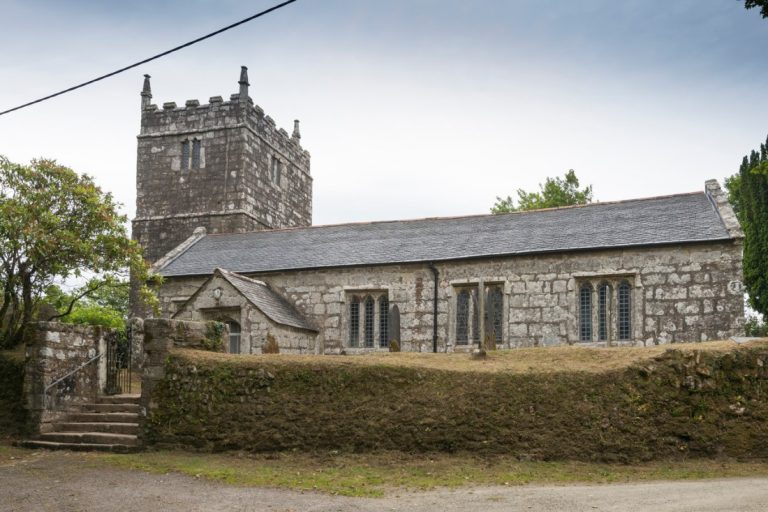
Warleggan Parish – How avoiding a ‘cluster’ saved the parish | Warleggan Parish, Truro Diocese
So, the ‘secrets of our success?’ In summary, a lot of good luck, excellent priests, a close relationship with our neighbouring parish, a priest…
-

Church of England’s donation cash falls despite income boost | the Telegraph
“The Parish Share often goes towards vital resources such as paying for a vicar. However, rural congregants and clergy are warning that they have…