

In praise of vicarages
We have the Revd Mark Clavier’s permission to reproduce his November 2025 blog post “In praise of vicarages”. This stresses their special importance as homes-cum-workplaces, reflecting the unique insider-outsider status of a parish priest, and suggests that dioceses should view them differently.
You never really know what a house has meant to you until you begin to leave it.
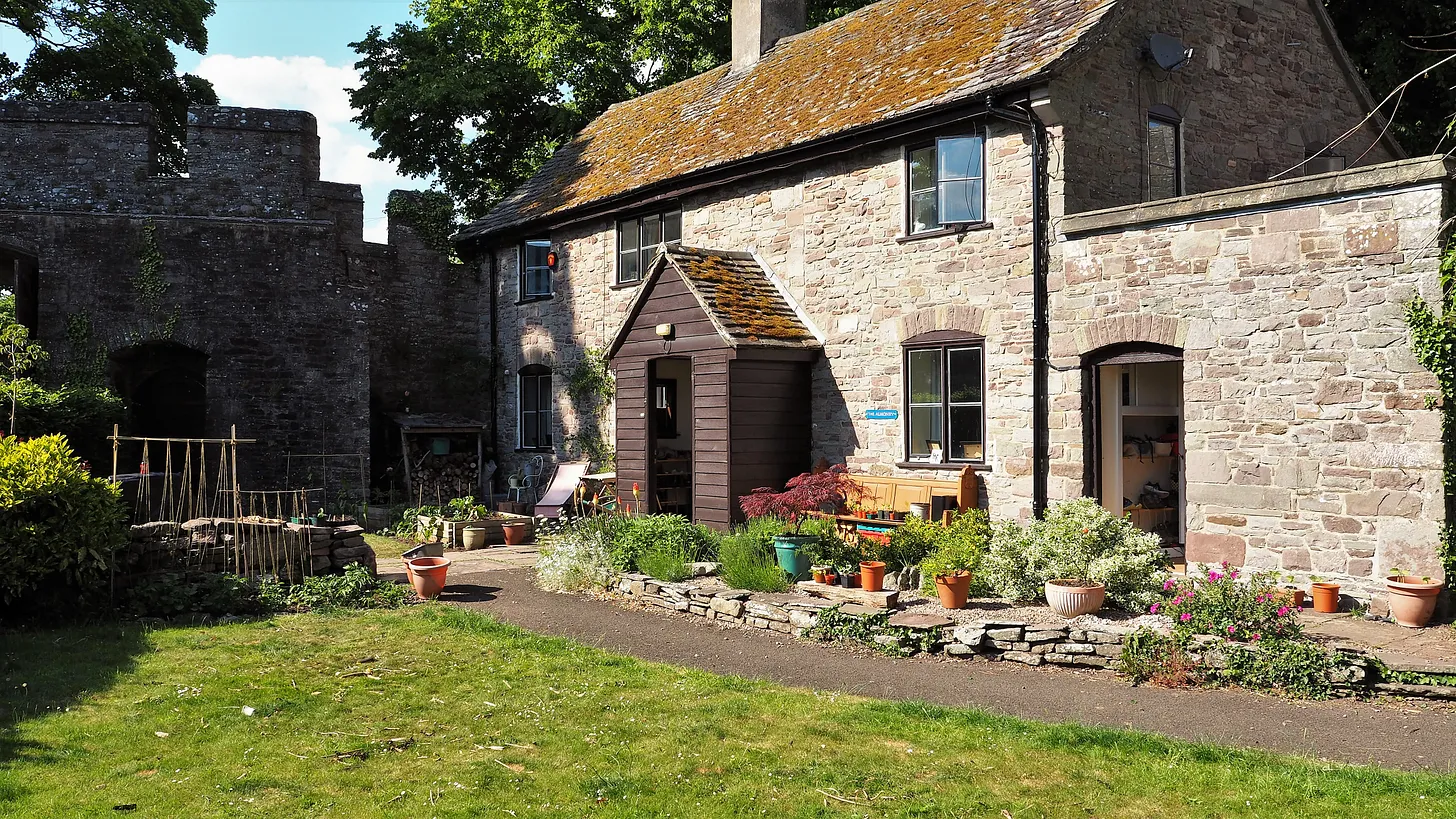
This Monday, Sarah and I will be officially moving out of our vicarage, where we’ve lived for a little over eight years. The Almonry was our first home together; we moved in three days after our wedding. It was also the last home I shared with my son before he left for university. I’ve lived in no house longer in my entire life. For all that we never owned it, it became our home in the fullest sense—a place shaped by memories, both happy and sad, as much as by mortar. I’ll miss living there terribly.
Our move isn’t voluntary. The Cathedral’s plans for a new west entrance will take half the Almonry garden for a paved plaza, and so we must leave. Happily, our cottage in Glasbury offers its own comfort. Tucked away in a tiny hamlet along a private lane, with a garden I love to tend, it has a rural tranquillity I cherish. Still, the heartache in leaving the Almonry will be real enough.
Over the years I’ve lived in three proper vicarages—four, if you count the Principal’s House at the old St Michael’s College—and I’ve come to believe they’re under-appreciated. Dioceses tend to treat them as assets to be managed, rationalised, perhaps sold—bricks on a balance sheet. They’re seldom regarded as homes, nor is there much awareness of the part a vicarage plays within the life of a community. Yet parishioners form a relationship with the clergy house much as they do with the church, the pub, or the village shop. It forms part of the geography of belonging here in Britain.
For many, the vicarage isn’t merely where the vicar lives. It’s where parents and grandparents once came to arrange their weddings, where joyful young couples requested baptism for a new baby, where the bereaved arrived in tears to speak of a funeral. These older memories are part of the building.
Architecturally, vicarages vary enormously. Some of the older ones have a quiet splendour: long drives, walled gardens, and modest space for servants. My vicarage in Steeple Aston in Oxfordshire was a comfortable modern stone house, built where the old Rectory’s garage once stood. That former Rectory, vast and splendid, had been sold off for a song in the 80s and, by the time I arrived, was worth well over a million pounds. I envied my predecessors their walled gardens.
My first vicarage in the UK, on the other hand, was a bunker with windows—a concrete survivor of late-70s ecclesiastical cost-cutting, so determinedly charmless that even an optimist would hesitate before calling it “home”. These boxy specimens punctuate some of England’s loveliest villages, built, it seems, to withstand a nuclear winter rather than welcome parishioners. They’ll stand long after their architectural sins are forgiven. Yet even they deserve more affection than they receive.
A vicarage is a peculiar kind of dwelling. Its charm, if that’s the right word, lies in this peculiarity. A vicarage never quite belongs to you. It’s both private and public, sanctuary and shopfront, haven and thoroughfare. Clergy live there on behalf of others. The house remembers this. And because it’s a home rather than an office, the pastoral and the domestic can’t be separated. Inviting someone into your house, where the dogs are shedding on the carpet, the laundry is piled on the table, and dishes are piled in the sink, is entirely different from receiving him or her into a church office. A vicarage blurs lines, often inconveniently, but more often reassuringly . The ministry that unfolds there is homely, human, and unguarded.
Belonging begins in the patient work of remembering. Vicarages are made for that work. They’re domestic spaces open to the world, bearing the traces of the pastoral flow of everyday parochial ministry—like river stones rounded by the passage of water.
And that openness isn’t merely symbolic. People feel free—rightly or wrongly—to knock at almost any hour. Once, a rather grand, elderly magistrate appeared unannounced to invite me to a party. Unfortunately, I was in the middle of building a fence, stripped down in the heat to shorts and boots and absolutely plastered in mud. When the bell rang, I came round the side of the house looking like a startled, half-dressed swamp creature. I’ve rarely seen a Brit move so quickly from formality to horror. She fled at speed and from then on always phoned before visiting the Rector.
But this kind of awkwardness is part of the vicarage’s strange grace. It’s the place where the community’s life intersects with your own in ways neither predictable nor tidy. The front door becomes a threshold across which sorrow and joy, crisis and celebration, bewilderment and gratitude all pass as freely as the daily post. It’s the house where the despairing come for consolation; where confused tourists ask for directions; where someone wants to drop off a cake; where couples are prepared for marriage; where a grieving husband arrives because he can’t bear his empty house another minute. And all of this unfolds not in a church or an office but in the kitchen, the garden, the living room—spaces where domestic life and pastoral care meet without ceremony.
St Benedict understood stabilitas as the grace of remaining in one place long enough to be formed by its patterns, people, and demands that shape a faithful life. Few clergy these days enjoy anything like that monastic rootedness; our stability is mostly provisional. Yet vicarages offer a faint echo of it. They anchor us to a particular place and its people, to the slow weaving of trust and belonging. To live in a vicarage—and especially an old one—is to recognise yourself as one small link in a long chain of service stretching behind you and, one hopes, ahead.
To live in a vicarage—and especially an old one—is to recognise yourself as one small link in a long chain of service stretching behind you and, one hopes, ahead.
The Almonry was like that for me, not least because of its long and layered past. In the days of Brecon Priory it housed the almoner—the monk charged with looking outward, offering care and provision to the poor at the monastery gate. After the Reformation it served for generations as the home of the estate manager who tended the estate. Only in the mid-20th century did it become a residence for canons, and since then a procession of clergy has lived and worked within its walls. In its old timbers and ancient stone, I’ve found a sense of continuity I’d never known elsewhere.
In this way, a vicarage is less a house than a companion. You inherit it from those before you; you hand it on to those who come after—until the line reaches its end. And part of the poignancy in leaving the Almonry now is the sense that its service as a clergy home may be drawing to a close, its future likely heading once again toward more prosaic uses. Yet I think it’ll retain the humble dignity of a place that has held many lives generously.
What I’ll miss most isn’t merely the building, lovely though it is, but the life it made possible: the view of the cathedral at dusk; the odd mixture of stillness and traffic in the Close; the happy meals I cooked for friends or family enjoyed in the gloom of the dining room; the unplanned conversations in my study; a last family meal with my father, which we didn’t know would be the last; the sense that each room had been lived in a hundred times before and could easily be lived in a hundred more.
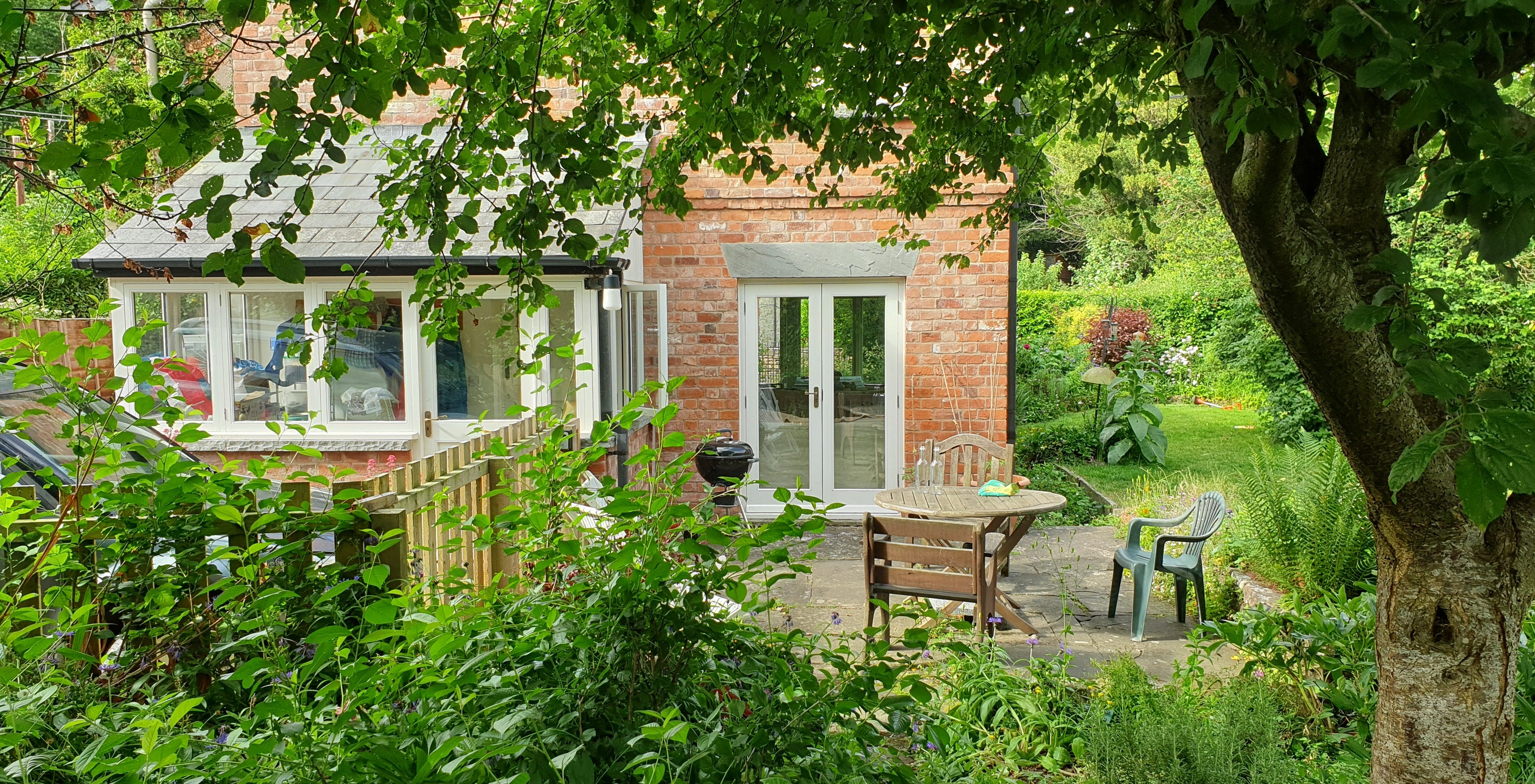
In our little cottage in Glasbury, I look forward to a different peace—a home that belongs wholly to us. Yet I’ll carry with me, with abiding gratitude, the memory of the Almonry as a distinct way of dwelling: porous, provisional, faithful.
This, in the end, is what I want to praise: not the vicarage as a structure but as a manner of life. A way that resists the modern urge to treat a house as domestic fortress or property investment and instead upholds it as a meeting place, where the boundary between one’s own life and the local community’s becomes vague enough for grace to pass through.
And so, we step into the next chapter with some reluctance but also with gratitude. Eight years in the Almonry has taught me to appreciate the vicarage—these odd, generous, meddlesome houses—and to be reminded that a home—any home—can be more than the sum of its rooms. It can be, in the best sense, a gift given and received, again and again.
Reproduced with permission. https://markclavier.substack.com/p/in-praise-of-vicarages



How wonderfully and brilliantly described from the heart for us all.
No more words needed!
Lovely, just lovely. As a born-again Christian, such vivid descriptions of monastic life help me stay rooted in my faith. Thank you for sharing.