Some reflections following retirement
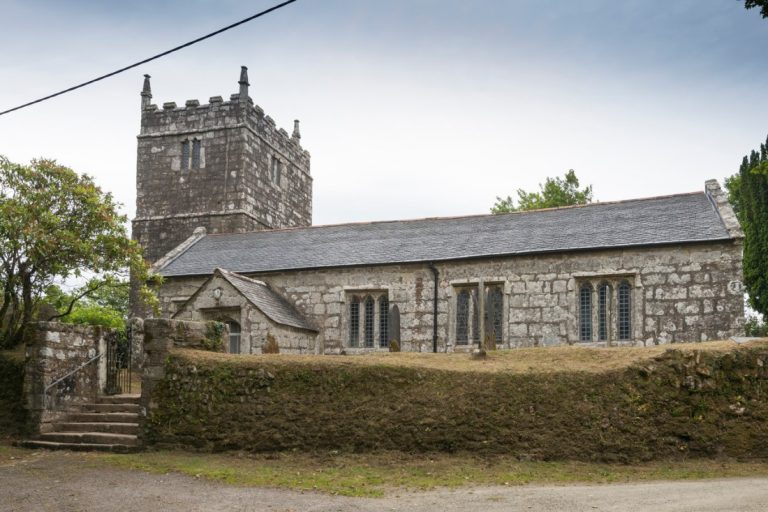
Retiring just a few months ago, I have had the opportunity to reflect on many things. None has caused me more anxiety than the current state of the Church of England and its parishes, especially, but by no means only, its bruised and beleaguered rural ones.
Those for whom I feel most sadness and concern are without doubt the hard-pressed but wonderfully committed churchwardens and PCC members who continue to suffer the egregious consequences of the current doctrinaire centralism, a Machiavellian powerplay designed to place more and more control in the hands of a bureaucracy who seek to change, to redefine, and to reinterpret not only the concept of ‘parish’ but even that of ‘church’. I and my former churchwardens were most grateful for the forensic work of STP members who diligently unearthed and analysed the parlous state of both the financial and strategic management of the C of E’s resources and showed us too that we were not alone as a parish in being treated with indifference and disdain.
Our particular situation caused many observers from outside the parish to scratch their heads in amazement as to why a financially secure rural parish church with many young families, a church school, a salaried youth worker, and supporting a missionary couple abroad were suddenly told that, ‘there was no longer a post to apply for’ when I retired since there was to be pastoral reorganisation. Whilst all available research showed that our numbers justified a full-time priest and indeed the need for additional ministerial help, this was completely disregarded. Seven whole months after receipt of my official Deed of Resignation, the diocese still had not produced their plan. And as I write now a full ten months after, my PCC are none the wiser except that the idea of any proposed amalgamation with the neighbouring parish has been rejected by that parish (of very much smaller membership), which of course is their right. Sadly, it is almost certain, even if the PCC do not contest the proposed reorganisation – when it is finally revealed! – that the parish will be without pastor and teacher until 2025 at the earliest. An eminently suitable and very willing candidate to succeed me was available to take up the post immediately upon my departure: however, initially having countenanced our ‘headhunting’ – the candidate having met with and been unanimously approved by my 18 strong PCC – the bishop had a change of mind.
What incensed my astonished churchwardens and PCC members (and continues to do so), several of whom are very highly regarded and, in some cases, have been decorated for their track records in their respective professional fields, was the very determined unwillingness to engage with them in an open and honest way: prevarication and procrastination quickly became the chosen modus operandi of bishop and archdeacon. This was indeed galling. The local voice, despite years of presence, experience, and expertise, counted for nothing in the face of numbers, targets, and ratios that made no practical, economic, or strategic sense save to reinforce new ‘models’ and methods which bore no relation either to current reality or to strategic need; indeed, quite the reverse! Such self-assured omnipotence made them blind and deaf to alternative solutions designed to effect sustainability and growth, solutions not purely academic or hopeful but empirically based, gleaned from first hand examples of the successful leadership and management of institutions and organisations facing similar challenges.
The lack of confidence and trust this engendered grew quickly: even the most traditional Anglicans, raised to bow or genuflect at the very mention of archdeacon or bishop, became disillusioned and felt betrayed, powerless to ‘save their parish’.
Although told that we could make our case to the Church Commissioners against the episcopal fiat on ‘pastoral reorganisation’ – even though no plan had been formulated or declared – we discovered that not only could the diocese string out our case over many months by various ploys, but it could also prove to be a very expensive affair for us. Of course, the diocese, having suspended presentation, still expected the parish to continue to pay the entire designated ‘quota’ including the stipend, national insurance, and pension element for a priest. There was a significant moral credibility issue here that the diocesan hierarchy was either unable or unwilling to grasp.
The PCC were left with not just the impression but the experience that the powers that be simply do not care; everything and everyone was expected to accept and conform. It mattered not that the empirical evidence was overwhelming in warning that the new ‘models’ were suicidal, the recent ‘initiatives’ but flights of fancy conjured up by the blinkered to bamboozle those they condescendingly deem benighted.
Obviously, each PCC must make up its own mind as to how to proceed when faced with such intransigence and ineptitude. My former one decided on moral, practical, and professional grounds to halt payments to the diocese. It was not an easy decision to make but they believed that they had an overriding moral responsibility to use responsibly and wisely the money entrusted to them by their parishioners.
And so as I reflect on over thirty years of parish ministry – not including before that time spent as a lay PCC member and sometime churchwarden – I find myself constrained in advocating an appropriate degree of parish financial rebellion with the triple purpose of bringing diocesan hierarchies to their senses, of forcing them to engage on humble and mutually beneficial terms, and, above all, of not only saving the parishes but also funding and manning them for sustainability and growth, not ‘managed decline’.
I realise that my reflections will disturb some, not least those who still trust in the competence, trustworthiness, and offices of bishop and archdeacon. But against this must be set the frightening and increasingly likely demise of our parishes, still, despite the challenges, the heart and soul of so many towns and villages and the most appropriate bearer in word, sacrament, and deed of the ‘Good News’ of Jesus Christ.